


Religion has taught us to pretend that death is not real and that life goes on in a magical realm, contrary to all evidence of the senses. In every society, the conversation has monopolized by advocates of the supernatural, and there is little in the way of organized approaches to replace that monopoly for materialists. Facing Death without Faith is a series that explores this topic, with a goal of easing existential angst by familiarizing ourselves with the event that we will all eventually experience, or rather, the event that will mark the end of experience for us all.
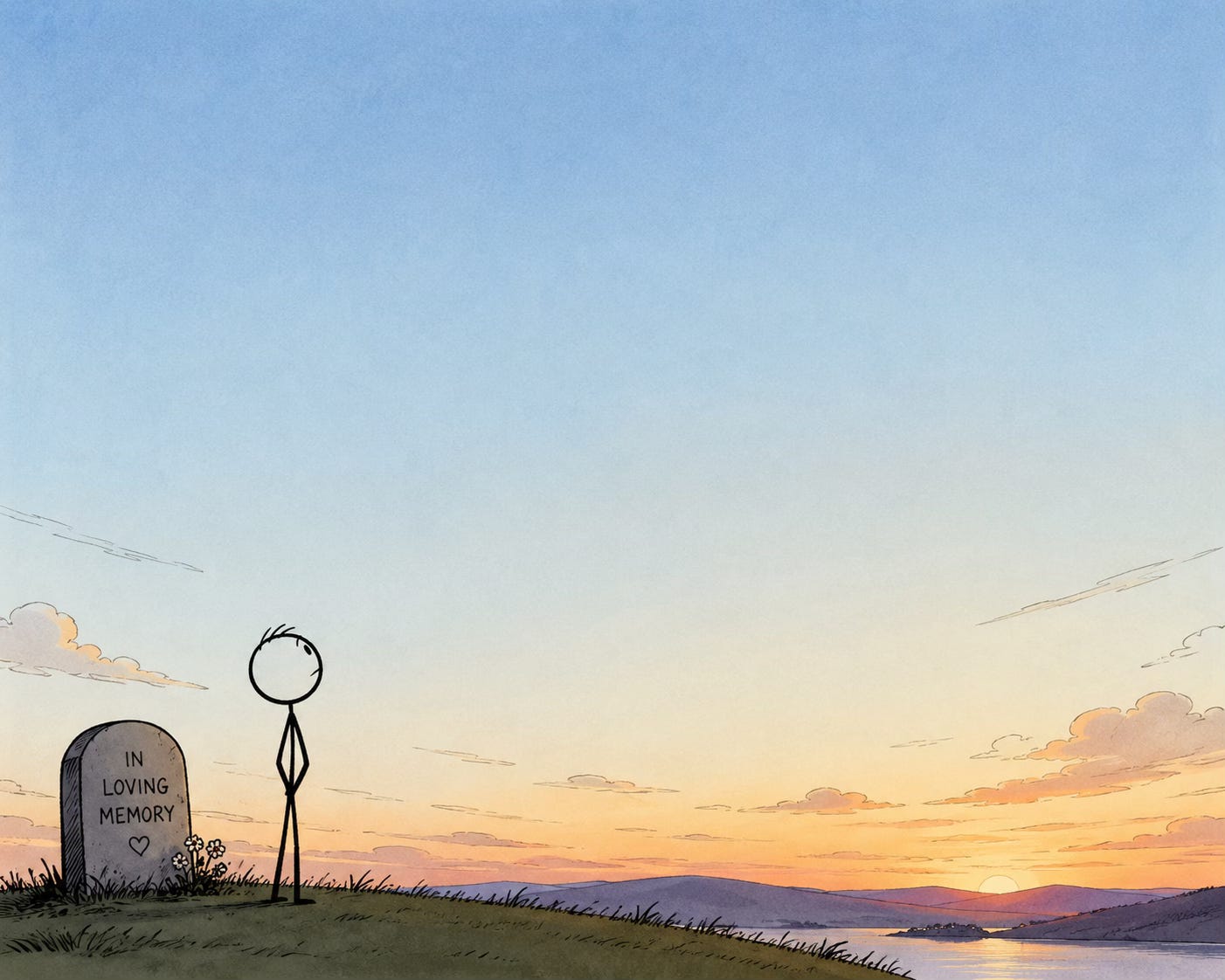
I have no desire to die. In fact, thinking of my own death sometimes gives me a keen sense of fear, and other times a sense of disappointment over all of the potential experiences I would miss out on, were I to die today. On rational reflection, however, I understand that both the very feelings of fear and of disappointment are only tangible while I live, and will be meaningless after I am gone. In addition, much of the actual fear I feel relates to the possibility of pain surrounding death rather than the death itself. All of these negative emotions color my experience now, but have absolutely nothing to do with my actual death. There will be no conscious ‘me’ to experience disappointment, worry, or any other emotion. It has taken time to cultivate a reaction that is not immediately negative, and there are still times when my initial emotional response to thoughts of death are more salient than the subsequent reason-heavy conclusions I strive for. My own death aside, I would be lying if I said that the idea of losing others that are close to me does not provoke a significantly greater level of existential angst. Thoughts about the future deaths of my wife, family, and close friends range from uncomfortable to extremely unsettling, and it takes considerably more effort to reign in the immediate, negative emotional response. Finding a psychological vantage point from where these fears disappear completely is likely unrealistic, however, there are steps we can take now to increase the chance of retaining some level of balance when our loved ones die.
The first step we can take, as mentioned previously in this series on Facing Death without Faith, is to normalize its inevitability by making time to think about it, openly talking about it, and prepare for it. Failure to familiarize ourselves with the death of our loved greatly increases the likelihood of maximal devastation when it does occur, especially if it arrives unexpectedly. Research supports this conclusion. Learning from experiences shared by fellow travelers on the road of loss can help us both reframe death and think through ways to deal with death when it comes. In addition to normalizing the inevitable, we may be able to change the manner in which we approach thoughts about death, which can lead to downstream changes in our feelings about it. The frontal lobes of our brain evolved as the ‘brakes’ to impulsive, reactionary behavior, and they play a similar role in taming reactionary emotional responses. Reframing the moment of death of loved ones is the topic for today’s essay.
Since I exited faith decades ago and began a journey to deal with the reality of life and death, one insight that I have found to be helpful is that an individual’s relationship to the deaths of loved ones can lie on a fairly wide spectrum of anticipatory anxiety and may shift drastically without their ever expecting it to, or even realizing it. Compared to the acutely emotional gut punch that would result from the unexpected death of a loved from a motor vehicle accident in the prime of their life, for instance, the death of the same loved one subsequent to a protracted terminal illness in their 80s may provoke a far less negative immediate response, and may even be perceived as a positive, in context.
Other examples are not difficult to imagine. As a psychiatrist, I frequently see patients worn down by caregiver burnout, after months or sometimes years of caring for an aging, demented loved one who has been robbed of personality, dignity, and memory. Physical illnesses or accidents may have doomed a relative we care for to a life of misery and daily pain. Others have spent their lives caring for a sibling, spouse or child with severe mental illness, terrified that the next phone call they receive may announce the next psychotic break or suicide attempt they have long feared. Watching someone that we love in daily, relentless, physical or emotional pain or who has been completely changed by dementia can shift our perception of their death from devastation to solace, knowing that it will bring an end to suffering. Even without a terminal illness, our loved ones all experience terror-filled dreams from time to time. They worry about children, parents, jobs, finances, health. They have experiences in their past that they would wish never to repeat, regrets they could forget, and memories of anguish throughout their lives. They experience the endless gamut of pain and illness that comes from being a flesh and blood creature on a bacteria-filled, spinning, watery, rock—from dull aches to scorching burns, from stabbing headaches to throbbing broken bones, from the discomfort of dental fillings to the protracted bowel prep for colonoscopies—each of these experiences, evidence of the unavoidable cost of being alive. Rather than merely highlight these negatives, the point to be made is the simple fact that thinking about death typically subconsciously tricks us into putting on rose-colored glasses. The very idea of a ‘loss of life’ for most people immediately brings to mind the positive experiences of being alive, but oddly, only those positive experiences. True, death takes away the possibility of further fun and games, but it also removes the possibility of any further suffering. This is more poignant and obvious in cases where pain maybe severe and on display, but the fact that death will relieve us from all current or future suffering is true for every one of us, loved ones included.
The idea behind this essay is not to convince us to suddenly hope that those closest to us suffer needlessly in order to ease our sense of grief when they pass—in fact, it is quite the opposite. It is to encourage an understanding that death may not be as black and white as it is usually painted, and to propose a strategy to reframe that understanding. As much as I wish there were an endless list of easily-attainable and life-altering insights regarding death, the truth is, changes in perception require work and occur gradually. That being said, equanimity is available, for dealing with death as with any other anxiety, and it is largely proportional to the time and energy we invest in facing reality on reality’s terms. This is the opposite of what we are taught to do by religion, yet in practice, it comes far more easily than trying to rely on bronze age texts, imagination, and misattribution of emotional salience to define reality. The power of the idea of heaven to soothe is only possible if one ignores evidence and sacrifices their brain’s natural reality processing, and thus, doubt can be a nearly constant feature of faith. This has never been truer than in the digital age, where the experiences of people on the opposite side of the world are available in the timeframe of a few clicks on a device. The fantasy of the supernatural is simply more difficult to maintain the more science advances. It may appear that this occurs at the cost of comfort, but I maintain that that comfort is merely one of the many illusions propped up by religious belief. It crumbles immediately with the pressure of reality. One thing to be said for accepting reality as a natural materialist, doubt becomes a thing of the past—evidence of the brain’s critical thinking hardware striving to work under the weight of indoctrination.
In regards to our own deaths in relation to our loved ones, I strongly recommend including them in discussions about death--our own and theirs. This may sound morbid but is actually a sign of love and trust and a way to decrease their own future distress. If you have a child or a spouse that you care deeply about, and you learn that you have developed a fatal illness that will leave you dead in the next year, will you withhold that information from them? As difficult as it may seem at first, I suspect that anyone who truly cares about their loved ones would immediately begin to have the difficult conversations about their illness and impending death, so as not to leave their loved ones unprepared, and risk leaving them even more devastated. Helping them plan will decrease their anxiety in the long run, allowing them to prepare for the eventual grief while you are still present and to begin taking steps to find solace. Given that all of our deaths are inevitable—even without theoretical terminal illness looming--there is no reason not to have the same discussions with loved ones now. We all have a terminal diagnosis, called life, and the clock began ticking the moment we were born. None of this is to say that losing a loved one may not be one of the most difficult things we go through in our lives. It is because of this in fact, rather than in spite of it, that we should be doing all we can to prepare, so that when the end comes, the distress is more manageable.
The final word, and the upside to everything death-related, is that the awareness of death is what actually brings significance to life. If we had an eternity ahead of us, our next road trip, our next meal at our favorite restaurant, the time we take to spend with our friends—every experience would be meaningless repetition. For reasons we may not ever fully grasp, we are the result of a process of life that began billions of years ago, and have slowly evolved from tiny unicellular organism to upright primates with conscious self-awareness. Of the billions of people who have existed on the planet and the billions of sperm cells and millions of eggs from your parents, the likelihood of you being here now is so infinitesimally small as to defy the comprehension of our primitive brains. And yet, here you are, and here I am. The fact that we are the result of random processes, rather than the flick of a god’s wand and a chant of ‘abracadabra,’ makes this all the more amazing. Escaping from faith’s cognitive jail cell allows us to see just how remarkable it is that we are here. We have the power to make our meaning and to make the most out of our limited time existing. The knowledge that we will not be around forever can create a profound appreciation for our day-to-day experiences. Perhaps as wondrous as our being here now is the fact that a small percentage of humans have also trusted their senses enough to follow the evidence to a place free of wishes, gods and beliefs. We can resolve today to try and make the world a better place for ourselves and others and to create the alternatives to the failed promises of religion, including alternative ways to face the end of this amazing process of life, for ourselves and our loved ones.
I am interested in community and in the experiences of all those who have avoided or escaped indoctrination with the supernatural, so if that is you, please share any input, especially if you have your own insights regarding death. I recommend The Mortal Atheist as a book for non-believers dealing with their own existential angst. I have also been impressed by Anderson Cooper’s All There Is podcast, during which he talks to celebrities that have lost loved ones. Both offer a place to start the process of normalizing the topic. As always, thanks to those who support me with follows and subscriptions.
The point about having these conversations now, rather than waiting for a terminal diagnosis, makes sense to me. We've all got the same diagnosis in the end, as you say, so there's no real reason to put it off.
I came from a strict religious family and walked away from all that as soon as I could, so the part about comfort being an illusion that crumbles under reality is something I recognise. I found my own beliefs in the end and I'm all right with where I've landed.