


The term ‘Religious Trauma Syndrome’ (RTS) was coined by an ex-Christian therapist in a series of academic articles in 2011, in which she formally identified a well-known, but rarely talked about phenomenon--that religion is capable of causing significant harm to mental health. RTS refers to a commonly occurring cluster of chronic symptoms, including guilt, shame, fear, confusion, loss of identity, and loss of meaning, all of which result from religious belief and practice. Similar symptoms already exist within the list of criteria for diagnoses like depression, anxiety and post-traumatic stress disorder, something that detractors of RTS like to point out. While this is true, it entirely misses the value of the concept of religious trauma—it is the unique and common cause of the symptoms that matters, especially given that the majority of the world’s population identify as religious and are, therefore, at risk. Despite a lack of formal acceptance of RTS in psychiatric literature, there has been a growing awareness of the legitimacy of religious trauma among practitioners, and it is now widely recognized in clinical settings.
It is important to accurately describe religious trauma, especially since ‘trauma’ has become such an overused buzzword in our culture that the use of the term by Tik-tokkers and wellness influencers often bears no resemblance to its clinical definition. Trauma as a stressful event or series of events that overrides the brain’s protective software and causes negative, long-lasting changes to the brain and to mental health. While this can theoretically happen at any point in life, the younger the age that this stress occurs, the more likely one’s developmental trajectory will be pathologically altered and symptoms will develop. Applying this definition to Christianity, religious trauma occurs in a variety of ways, individually or in combination:
Negative beliefs: i.e. negative beliefs about one’s sinful nature and need for eternal punishment often trump any positive Christian messages, especially when doubts are present about salvation or one’s relationship with god
Judgmental religious community: i.e. one’s religious leaders and peers may pass judgment on others as part of the belief system, most commonly regarding sexual behavior
Retaliation for attempts to leave one’s community: i.e. one’s religious leaders and peers may threaten and intimidate, both physically and emotionally, showing up at one’s home and place of work, encouraging beliefs that one will be lost forever without that community
Worldview collapse: i.e. loss of a sense of meaning, purpose, and comfort can accompany the acquired knowledge that one’s beloved belief system is not real
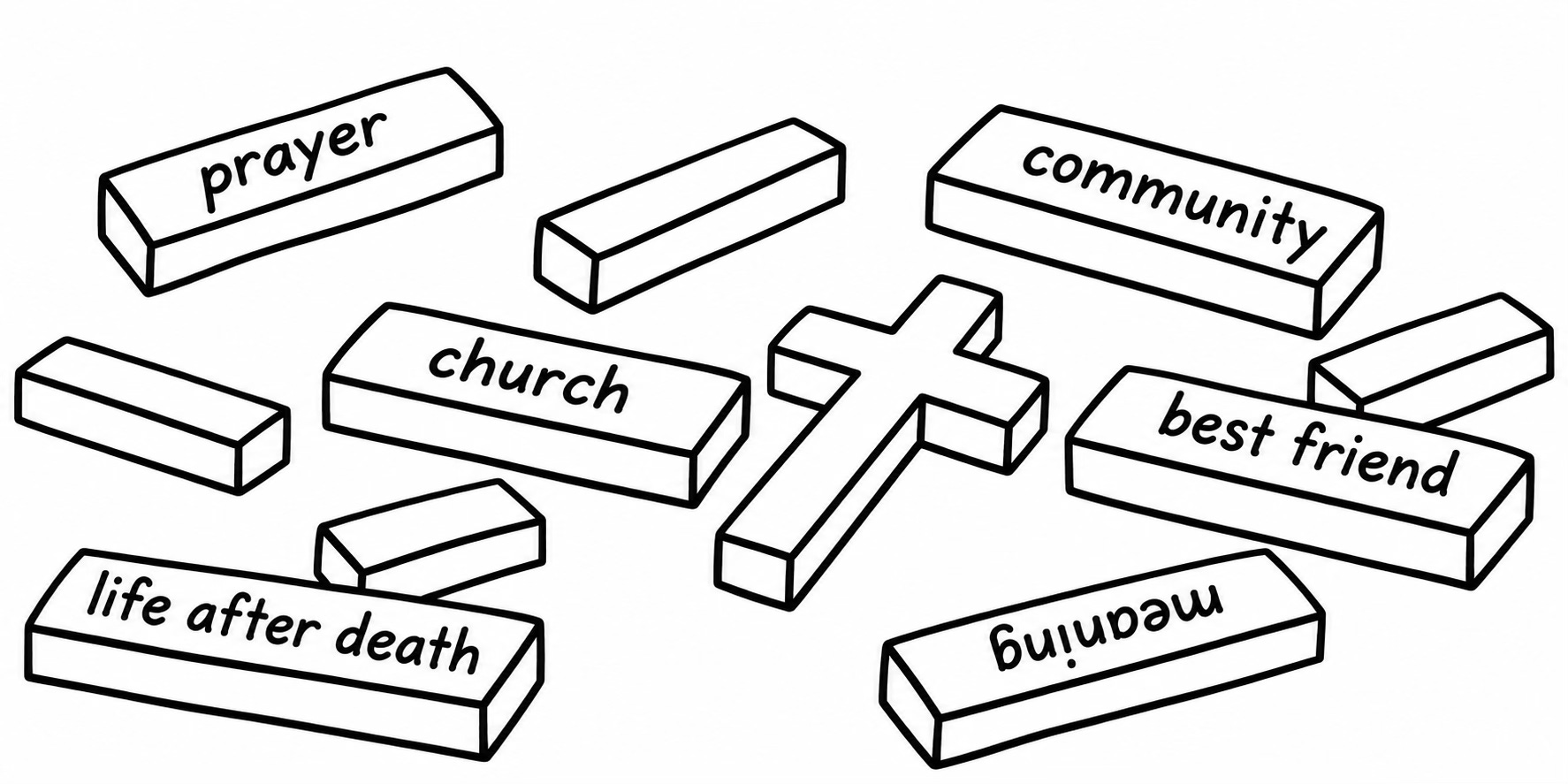
Many who experience religious trauma are unwilling to let go of their religion due to fear of perceived existential repercussions, unable to see that this fear itself only exists because of religion. For those that are no longer able to maintain an imagined, religious worldview, each of the illusions of comfort that had been propped up by that worldview disintegrate. Prayer, heaven, an unconditionally-loving community, a relationship with an imagined best friend—each of these are lost to former believers. The isolation that accompanies worldview collapse can be profound. The community that a recently ex-believer would normally turn to in times of distress does not long tolerate anyone that has rejected the belief system that it still clings to. ‘Meaning’ is perhaps one of the strongest illusions of Christianity, so the sudden realization that there is no god or church to serve can leave ex-believers feeling devoid of purpose. Fear of death often creeps in once the idea of Heaven becomes fictional. Like a tall Jenga tower balanced on a single, carefully centered cross-shaped block at the bottom, all of the meaning, community and comfort offered by Christianity are at risk of a disastrous, inevitable collapse once the foundational block—the requirement of shared belief—is removed from beneath.
‘I wish I still believed’ is a very common sentiment for those who leave religion. This period can be one of considerable risk for turning to alternative religious belief systems, cults, or of giving up and turning to nihilism. While not technically a specific symptom of trauma, the underdeveloped critical thinking that helped a believer maintain their projected spiritual reality can also hinder attempts to heal from religious trauma. Recovering the ability to determine what is actually real vs. what one has merely convinced themselves is real, is an important step in the process. From there, finding non-religious support and evaluating the potential need for professional help are important early steps. Worldview collapse is a loss, and the emotional experience is similar to the loss of a loved one. The stages of grief are normal during this time: denial, anger, bargaining, depression, and acceptance (not necessarily in that order).
For those that are able to ride out the distress of a lost worldview, or find ways to help themselves heal and recover, discovering a life founded in reality can feel like finally removing the corners and sanding down the edges of the square that had for years been poorly crammed into a round hole. Things make sense for the first time. Doubts about ‘salvation’ and about the reality of imagined relationships with projected beings evaporate; real human connections can be made that are not contingent on shared belief; genuine purpose can be discovered. Perhaps most importantly, an appreciation of the fragility and wonder of our existence is finally available. For so many of us, life within Christianity felt like being in a waiting room, awaiting the ‘real show’ after death, and spending all of our time lost in judgment of ourselves and others while we waited. The understanding that what actually matters is right here and right now is life-altering, and with time, genuine life experiences can be built upon the collapsed ruins of a religious worldview.
Thanks as always for the support. Please comment if you care to share your experiences. Feel free to DM with questions about religious trauma.